Person
Biography
Dated record from the 1434 Salzburg appearance through the Padua doctorate of 1439 and Wittelsbach court service to 1468.
Read →Works
Corpus
Twelve attributed works with attribution-status pills and primary witnesses; featured nine-witness Kräuterbuch table.
Read →Object
Cgm 7958
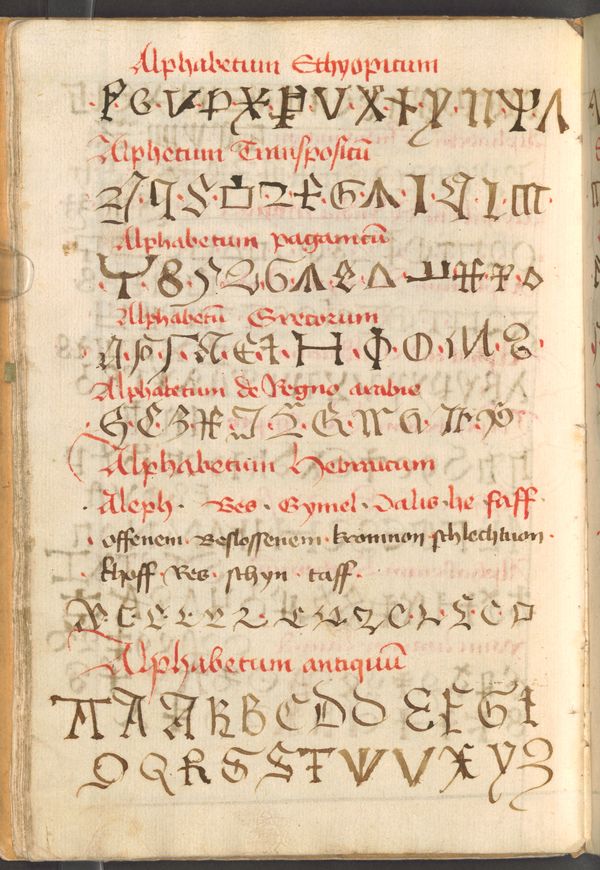
München, BSB, Cgm 7958. Compilation Anno 1456: onomatomantic engine + 28-mansiones-lunae + world-alphabet inventory + computus colophon.
Read →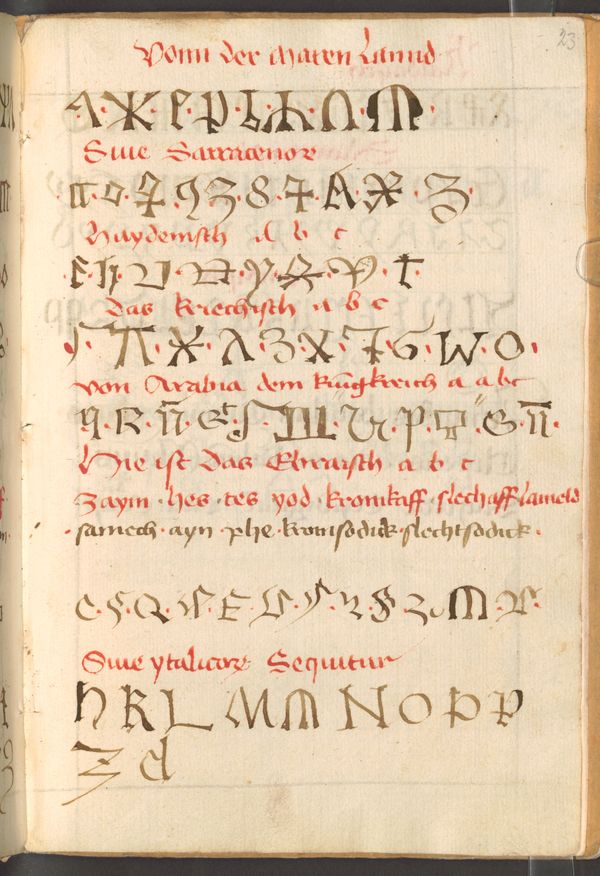
Primary object of record
München, BSB, Cgm 7958
- Object state Fully digitized at source (BSB-MDZ)
- Authorship Self-attested fol. 9r
- Comparator Apparatus-class, open to falsification
Compilation Anno 1456. Iatromathematical onomatomantic engine + 28-mansiones-lunae apparatus + world-alphabet inventory + computus/sanctorale colophon. 25 leaves, BSB-MDZ digitized. The most analyzed Hartlieb manuscript and the densest carrier of the iatromathematical apparatus. (Per direct image inspection: Cgm 7958 does not contain a Mondwahrsagebuch tract; that work is attested in other witnesses; see corpus record.)
Self-attested in colophon ("Das puch hat zu deütsch pracht meister hanns hartlieb doctor medic[us] durch pett willen der edeln wolgeporn frawen Katherina"). Direct attestation on fol. 9r (BSB-MDZ canvas 21). Carried as a working hypothesis under investigation: an apparatus-class comparator for Beinecke MS 408, open to falsification. Architectural comparison only, not authorship or content identity.
Open Cgm 7958 record![München, BSB, Cgm 7958, fol. 9r. The load-bearing Hartlieb attribution colophon: 'Das puch hat zu deütsch pracht meister hanns hartlieb doctor medic[us] durch pett willen der edeln wolgeporn frawen Katherina.'](assets/img/cgm7958_authorship_p21.jpg)
The record at a glance
The site is organized in three lanes, the person, the works, and the primary object. Each lane points back to file-of-record evidence on the witness side rather than collapsing into a single interpretive frame.
The biographical record runs from the 1434 Salzburg appearance through the Padua doctorate of 11 May 1439, the Wittelsbach court service from 1441 to 1468 under five princes, and the diplomatic missions to Ferrara 1446 (provisional pending Fürbeth 1992), Heidelberg 1447, and Brandenburg-Kulmbach 1456. It is built from Wittelsbach court documents, the Padua doctorate register, and the Fürbeth 1992 monograph, with explicit hedging where source-lock is incomplete. The full dated record sits in the biography.
The attributed corpus runs to twelve works classed by attribution status, colophon-attested versus tradition-attributed, with primary witness and date for each. The cluster covers the Kräuterbuch (herbal), the Mondwahrsagebuch (lunar prognostic), the Buch aller verbotenen Kunst in Cpg 478, the Buch Trotula and Secreta mulierum gynaecological translations, the Chiromancy, and the Latin literary translations. The Kräuterbuch alone carries a featured nine-witness table including direct folio observations on Berlin, SBB, mgq 2021; Wolfenbüttel, HAB, Cod. 79 Aug. 2°; and Heidelberg, UB, Cpg 311. The full register sits in the corpus record.
The primary object of record is München, Bayerische Staatsbibliothek, Cgm 7958: compilation Anno 1456, 25 leaves, carrying an iatromathematical onomatomantic engine + 28-mansiones-lunae apparatus + world-alphabet inventory + computus/sanctorale colophon together. The apparatus rests on the Aristoteles / Plato / Haly (Ibn Ridwan) authority chain and runs on four working components; a ring of 28 Arabic lunar mansions, a weekday-value system, a name-sum computation, and an outcome wheel, and the codex is self-attested as a Hartlieb translation on fol. 9. The full object record sits at Cgm 7958.
Research program
This site is the public surface of the Johannes Hartlieb Life-to-Death research program at Honeycutt AI Labs. The program reads Hartlieb as a working court physician inside a documented teacher-student tradition rather than as a literary figure in isolation.
The source-tradition arm of the program documents what Hartlieb read and used across eleven source-tradition papers. The textual and technical material he drew on covers Konrad von Megenberg's Buch der Natur, Book V, on herbal substance, the Lull volvelle apparatus on computation, the Padua teacher chain of Cermisone and Montagnana on consilia practice, the 28 Arabic lunar mansions, the Picatrix tradition, ars memorativa, the Secreta mulierum tradition, compressed record-keeping technique, and adjacent religious and literary works. Each thread is carried as its own paper rather than collapsed into a single biographical summary.
The apparatus-class comparison arm carries Cgm 7958 as a comparator for Beinecke MS 408, the Voynich Manuscript. The comparison operates at the level of structural architecture, lunar-mansion ring, weekday-value system, name-sum computation, outcome wheel, and not at the level of authorship or content identity.
This claim is carried as a working hypothesis, open to falsification, scoped to apparatus architecture. It does not propose Hartlieb as the author of Beinecke MS 408. Competing frameworks, including Brewer 2021 on gynaecological content, are tracked in the research record.
Scope and boundary
The site holds to the institutional record convention: object first, shelfmark first, state first. It is not a decoder, not a biography of legend, and not a venue for unsourced reattribution.
In primary scope, the site carries biographical dates and documents, the attributed corpus with attribution-status labels, witness manuscripts with shelfmarks and digitization state, and the source-tradition record behind the works.
Bounded inside that primary record, comparative research runs an apparatus-class comparison between Cgm 7958 and other iatromathematical manuscripts, including Beinecke MS 408. The comparison is carried as a working hypothesis, open to falsification, with falsification criteria visible.
Out of scope: no claim is made that Hartlieb authored, compiled, or owned Beinecke MS 408. The comparator relationship is architectural, not biographical or palaeographic.